.webp)
The Road Has a Door: Aniimo and the Pleasure of Coming Back
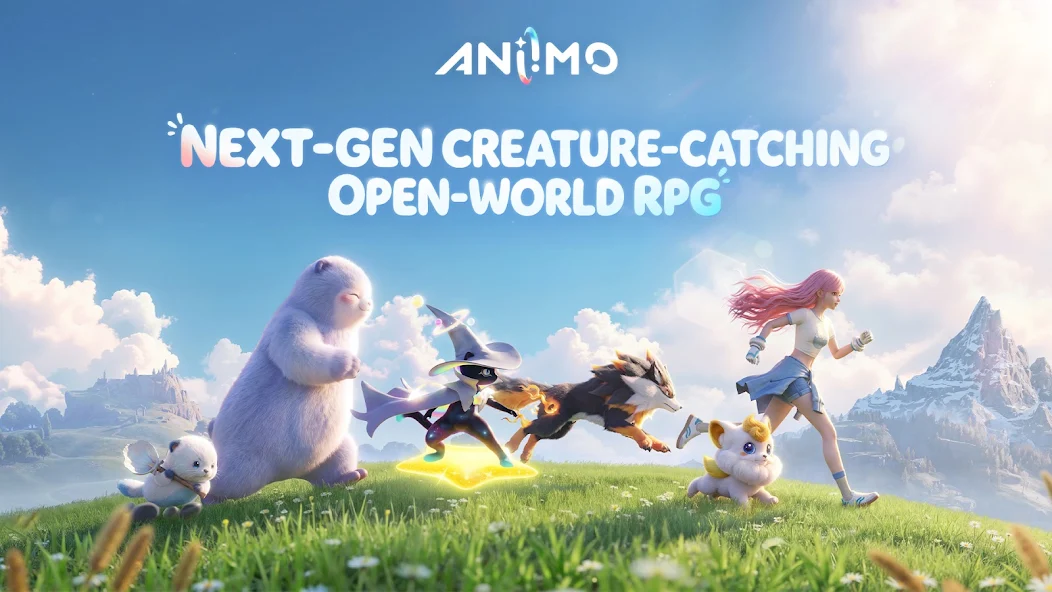
Most open-world games are secretly about leaving. You depart from a starting village, push outward through a series of increasingly dangerous regions, and the fog on the map peels back as the distance from where you began grows. Home, if the game bothers to provide one, tends to be a menu: a chest, a crafting bench, a bed that advances the clock. It exists to be used and left. Aniimo, the free-to-play creature-catching RPG from Pawprint Studio that launched on September 16, 2026 for PS5, Xbox Series X|S, and PC, with mobile following on September 23, takes a quieter and more unusual position. It builds a surprising amount of its identity around the opposite verb. Beneath the creature-catching and the open world of Idyll sits a game that cares about coming back, about the small pleasure of closing a door behind you after a long day outside, and about what a creature-collecting game feels like when the place you return to matters as much as the places you go.
The clearest symbol of this is the RV. In Aniimo the player’s base is not a fixed building anchored to a spot on the map. It is a moving home, a camper van that serves as the doorway to the Homeland, the customizable space where players build, decorate, farm, and relax. That detail sounds like a cosmetic choice, the kind of whimsical flourish that gives a game a visual signature, but it carries a real design argument. A home that travels with you is a home that does not force you to choose between adventure and comfort. The road and the door are the same object. You can drive off into a stretch of Idyll you have never seen and still, in some meaningful sense, be carrying the place you belong along with you.
This piece is an argument that this idea, more than the creature roster or the open-world scale or even the headline mechanic of merging with your creatures, is what gives Aniimo its character. Creature-collecting games have always been about relationships, but they have traditionally imagined those relationships as happening in the field, on the road, in the heat of a fight. Aniimo suggests that a relationship also needs a kitchen table. It needs a room where the creatures you have met can simply exist, and a rhythm of leaving and returning that makes each trip feel like it was for something.

A Genre That Forgot to Go Home
To appreciate what that means, it helps to notice how rarely creature-collection games take domestic life seriously. The classic structure is a journey: you leave, you travel, you gather, you prove yourself, you reach a summit. The creatures you catch spend most of their existence in storage, summoned for battles and returned to a box afterward. There is genuine affection in that arrangement, but it is the affection of a collector, not a housemate. The creatures do not live anywhere. They wait. A box on a menu screen is, when you think about it, a strange place to keep something you claim to love, and the genre has largely trained players not to think about it.
Aniimo’s Homeland quietly corrects that. Players can build and decorate a base, farm resources alongside their Aniimo, and set up fairground-style attractions, with facilities reached from an RV campsite. The details matter because each one gives creatures something to do besides fight. A creature that helps you gather resources is a colleague. A creature that runs an attraction at your fairground is a performer. A creature that simply lives in the space you have decorated is a neighbor. None of these roles require a battle, and together they push the creatures out of the storage box and into a shared life.
This is a bigger shift than it looks. When creatures exist only as combat units, your relationship to them is defined by usefulness in a fight, and that relationship has a built-in expiration date: the moment a stronger option appears, the old one goes back into the box. When creatures have a place in a home, your relationship is defined by living alongside them, and that is a warmer, slower, more durable kind of attachment. It is hard to swap out a creature that has a corner of the Homeland arranged around its habits, in the same way it is hard to throw away a chair that has become somebody’s favorite. The Homeland turns a roster into a household, and a household has a kind of memory that a roster does not.
There is also something to be said for what the Homeland does to time. Combat and exploration are intense, eventful modes of play, full of small spikes of risk and reward. A home is the opposite. It is a place where nothing urgent is happening, where the satisfaction comes from arranging, tending, and noticing. Games that lack this register tend to feel relentless, because every minute is spent in a mode that demands attention. A game that includes a place to put the demand down can sustain much longer sessions, and can make the intense parts feel more intense by contrast.
The RV as a Rhythm
What makes the structure work is rhythm rather than any single feature. A game built around departure and return has a natural cadence: you go out with a purpose, you encounter things you did not expect, you come back with something to do with them. The RV matters because it compresses that cadence. Because the base is portable, the return is never a long trudge back to a distant town. It is a short step from wherever you happen to be, which means the loop between exploring and settling can tighten or loosen according to your mood.
That flexibility changes the emotional shape of a play session in a few distinct ways:
- Expeditions feel safer to begin. Knowing that home is never far away lowers the cost of wandering, which encourages the kind of unplanned detour that open worlds are supposed to inspire but often punish.
- Returning feels like a reward. The Homeland becomes a place to unpack the day, to see what your creatures have been up to, and to turn raw resources into something visible.
- Progress shows up in the room. A decorated, expanded base is a record of what you have done, readable at a glance in a way a stat screen never is.
- The day has a shape. A session that begins at the RV, wanders out into a biome, and ends back among your belongings has a beginning, middle, and end, which is more satisfying than logging off in the middle of a field.
The last two points are easy to underestimate. Progress in many games is invisible, a number that went up, a bar that filled. Progress in a home is something you can walk through. Every piece of decoration, every attraction, every corner you rearranged tells a small story about the player who made it, and because the base is personal, it quietly turns a shared game into an individual one. Two players can have the same creatures and the same quests and still have Homelands that look nothing alike, and that difference is where a lot of long-term attachment comes from.
The portable nature of the base also changes the geography of the world. In most open-world games, the map is organized around fixed hubs, and the player’s movement becomes a series of trips between them. When your home can appear wherever you choose to park it, the map is organized around you. You are never really away from the center, because you can always bring the center closer. That is a subtle reversal of the usual relationship between player and world, and it gives Idyll a gentler, more welcoming quality than a landscape that insists you earn every inch of distance from safety.
What a Household Does to a Roster
More than two hundred Aniimo are available at launch, spread across biomes with their own ecologies, such as Driftwise Meadow, Sandcastle Hill, and Rosetower Wood. Many of them take on different forms depending on factors like weather and environment, and the game tracks what you have caught in the Anilog, an in-game index in which each entry is tagged with its element and grade. In a catalogue-driven game, that kind of roster would be the whole point: a vast list of things to fill in.
In a game with a home, the same roster plays a different role. A creature that changes with the weather is a creature that has moods, and moods are most legible when you live with someone. You do not see a creature’s habits in a quick battle, but you might see them over several days in a base that you return to repeatedly. The Homeland gives the roster a stage on which personality can show up, and the more creatures there are, the richer that stage becomes. The Anilog, in that light, reads less like a checklist and more like a family album: a record of who you have met and who has come home with you.
This is also where the creatures’ design philosophy comes into focus. A game that wants its creatures to be fighters needs them to be powerful, distinctive, and readable at a glance. A game that wants them to be housemates needs them to be charming, expressive, and pleasant to have around. Aniimo’s visual identity, the soft shapes, the bright palettes, the witch-hat-wearing sprite riding a glowing star in its key art, points toward the second goal as much as the first. These are creatures designed to be looked at for a long time, which is exactly what a home invites you to do.
A reasonable question is whether the two goals can coexist. Creatures built for combat have to carry typing, grades, and numbers that can be optimized, and a household of optimized units can feel like a workplace. The more successfully the game lets creatures be both useful and lovable, the more the home feels like a home rather than a barracks. That is a hard balance to strike, and it is one the game will be judged on as players spend more time with it.

Astra and the Return to Other People
The Homeland is the private half of Aniimo’s idea of home. The public half is the hub city, a sky-floating metropolis where Pathfinders meet. Where the RV is a personal retreat, the city is a commons, a place where the solitary rhythm of exploring gives way to the busier rhythm of other players. It also offers the kind of ordinary services a settlement should: shops, accessories, a place to be among people rather than merely alongside their avatars in a field.
The pairing of those two spaces is more considered than it appears. A game with only a private home would feel lonely, and a game with only a public hub would feel like a lobby. By offering both, Aniimo lets the player choose the temperature of their return. Some days you want to close the door of the RV and rearrange your furniture. Other days you want to wander into the hub and see what everyone else has done with their creatures. The game treats both as legitimate ways of being home, and the existence of the choice is itself a form of comfort.
This matters because creature-collecting has always had a social undercurrent that games have been slow to support. The pleasure of showing someone your favorite creature, of trading, of comparing, of arguing about whose team is better, is as old as the genre. The playground trade and the lunchtime battle were part of the original appeal long before online features existed. Aniimo supports that social layer directly, and it does so in a way that treats other players as visitors and neighbors rather than merely as competition.
The hub also helps with a problem that open-world games often have, which is that a huge, beautiful map can feel empty. A world full of landscapes but short on other people can be lonely in a way that no amount of scenery fixes. A central place where players congregate changes the emotional temperature of the whole game, because it reminds you that the wilderness is a choice. You can always go back to where the lights are on.
Leaving Together
There is a subtle difference between playing with other people in a world and visiting each other’s lives, and the structure of Aniimo leans toward the second. Players can call for help or invite others into their open world using tools like the Horn and the Flute, and that framing is closer to knocking on a neighbor’s door and asking if they want to come out than it is to joining a matchmaking queue. The distinction keeps multiplayer from feeling like a separate mode with its own menu and its own rules. It feels like an extension of the same domestic rhythm: you have a home, you have friends, and sometimes you go on a trip together.
Co-op boss challenges fit naturally into that rhythm. Fights against large creatures, such as the Bubbask and Coraliz encounters added for groups, become shared expeditions, a reason to gather people and a story to bring home afterward. The shape is familiar from real life. You do not go on a hike for the hiking alone. You go because of who comes with you, and because of the conversation that happens on the way back. Co-op bosses give players that structure: a goal that needs more than one person, followed by a return to the base where the spoils are sorted and the story is retold.
Trading adds another layer. Players can exchange Aniimo directly, and in a game where creatures live in homes, a trade is not simply a transaction. A creature handed from one player to another has spent time in someone else’s Homeland, and that history travels with it, at least in the imagination of the people involved. It is the digital equivalent of passing along a plant you have been growing, and it carries a similar sense of generosity.
Even the competitive mode fits the pattern. Diamond Egg Heist pits teams against each other in an objective-based contest, and the egg-heist premise suggests a mischievous rather than grim tone. Cross-play is enabled across every platform, so PC, console, and mobile players share the same servers rather than being split into separate populations. For a game built around the idea of a shared home, that decision matters. It means the neighbor you meet in the hub might be on a different device, and the community stays a single community rather than fragmenting by hardware.
What emerges is a picture of multiplayer as hospitality. The goal is less to establish a hierarchy than to make a world in which people are pleasantly likely to run into one another, with a shared place to return to when the adventure is over.
Twining and the Reason to Leave
It would be a mistake to suggest that Aniimo is only about staying in. A home only means something if there is a reason to leave it, and the game’s signature mechanic is that reason. Twining lets players merge with the creatures they catch, taking on their forms and, in turn, unlocking traversal abilities like flying, burrowing, and sprinting, along with creature-perspective puzzle solving and changes to combat. It is the mechanic that makes the outside world worth entering, because it turns every trip into a kind of costume change: you step out as one thing and discover the landscape from the point of view of another.
What is interesting from the standpoint of this argument is how neatly twining and the Homeland complement each other. One is about becoming a creature. The other is about living with them. Together they describe a full relationship: you spend time inside their way of moving through the world, and you spend time beside them in a shared space. The first gives the second its meaning, because you have seen what the creature can do and what it is like to be it. The second gives the first its emotional anchor, because the creature you wear in the field is the same one that lives down the hall.
There is also a rhythm of discovery to the arrangement. A player who twines with a flying creature to reach a high ledge, finds something unexpected, and carries it back home has completed a small narrative loop. The trip had a reason, the creature made it possible, and the Homeland is where the result lands. Over dozens of hours, those loops accumulate into something that feels like a life rather than a progression bar.
The effect is that leaving and returning reinforce each other. The more interesting the outside world is, the more satisfying it is to have somewhere to come back to, and the more comfortable the home is, the more freely a player is willing to wander. Aniimo’s two halves are not separate design goals. They are the two ends of a single motion.
Where the Warmth Wears Thin
None of this is guaranteed to hold, and the risks are worth stating plainly. The first is that domestic systems are only as good as the reasons to engage with them. A Homeland can be charming for an evening and then collapse into chores if the loop of farming and decorating does not keep offering fresh motivation. Cozy games live or die on the quality of their small satisfactions, and a base that merely accumulates objects can quickly feel like a spreadsheet with furniture. The question is whether the game keeps giving players new things to want for their space, new creatures to house, new attractions to build, new reasons to care how the room looks, or whether the loop flattens once the initial novelty fades.
The second risk is the free-to-play structure itself. A game that sells decoration and attachment has an inherent tension with a shop, because the more personal the space, the more tempting it is to monetize. Aniimo is free to play with real-money purchases, and the pre-launch conversation around the game has naturally included questions about how aggressively that will be handled. Whether players feel that the Homeland is a place to express themselves or a storefront with a bed in it will depend on how carefully that balance is struck over the months ahead, and a community that feels nickel-and-dimed will lose the warmth that the whole design depends on.

The third risk is the tension between the quiet and the competitive. A game that wants to be a pleasant place to return to also has PvP, boss fights, and a roster of creatures with grades and elemental matchups. Those systems reward optimization, and optimization tends to crowd out the slower pleasures of looking after a home. A player who is chasing the strongest team may stop thinking of their creatures as housemates at all. Aniimo will need to keep both audiences comfortable at once, and keep the home feeling like a meaningful part of the game even for players who are mostly there for the fighting.
The fourth risk is scale and launch stability. A new live-service game arriving across consoles, PC, and a week-later mobile release is asking a lot of its infrastructure, and a game whose appeal rests on a feeling of shared, relaxed community is particularly vulnerable to the friction of a rough launch. Cozy atmospheres do not survive long queues and server hiccups. The cross-play promise is generous, but generosity of that kind has to be backed by reliability.
None of these risks is a reason to dismiss the design. They are the honest costs of an ambitious idea, and the fact that they are interesting costs, questions about community, commerce, and the texture of attachment, is part of what makes the game worth discussing.
What a Home Teaches a Genre
The lesson of Aniimo’s approach, if it succeeds, is that a creature-collecting game does not have to be a story about departure. It can be a story about belonging, about a person who builds a life out of the creatures they meet and the place they make for them. The open world supplies the surprises. The Homeland supplies the meaning. The hub city supplies the company. And the mechanic of merging with your creatures supplies the reason to go out and look at everything again through someone else’s eyes.
That is what the RV, in the end, represents. It is a promise that the road and the door can coexist, that you can go anywhere without losing the place you are from, and that coming back is not the end of an adventure but half of it. In a genre that has spent decades teaching players to keep moving, to push toward the next region and the next badge, a game that stops to ask what you would like your home to feel like is making a quietly bold bet. It is wagering that after the thrill of the chase has faded, what players remember is the warmth of the place they came back to.
Whether that wager pays off will depend on the small things: the rhythm of the loop, the charm of the creatures, the generosity of the shop, the health of the community in the hub. But it is a bet worth watching, and a welcome reminder that the best part of a long trip is often the moment you turn the key, step through the door, and find that everyone you care about has been waiting for you there.